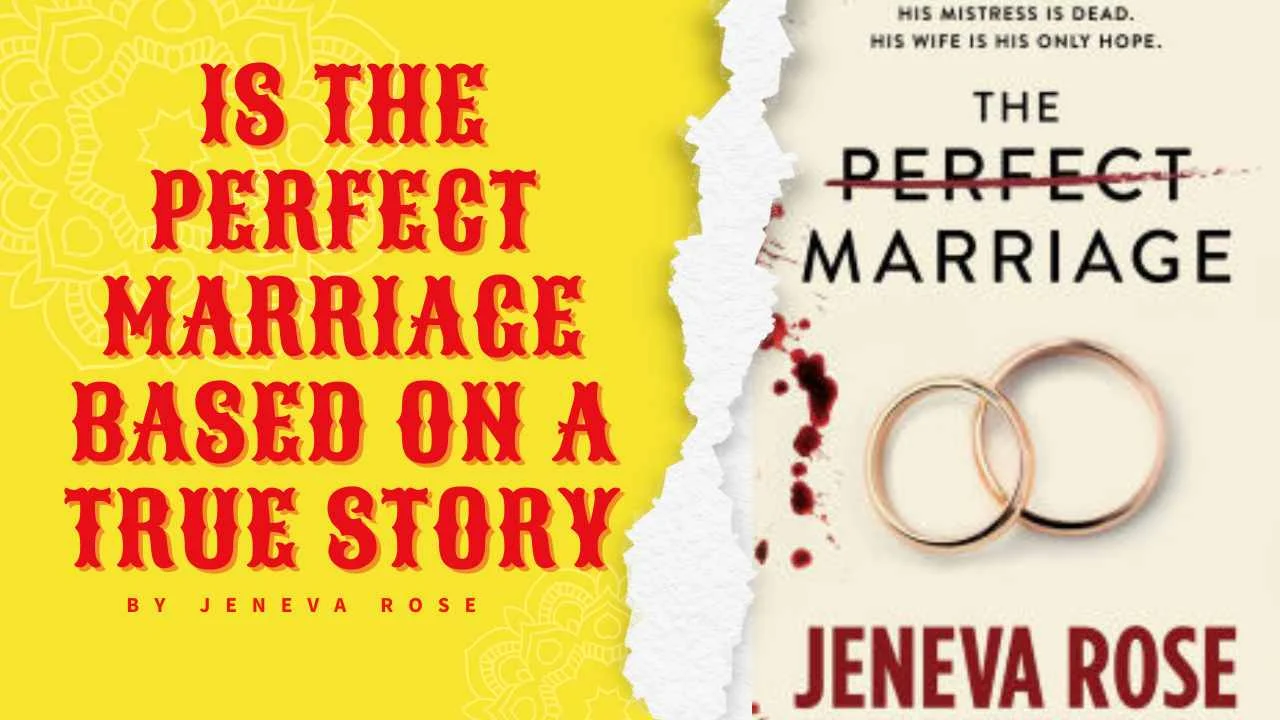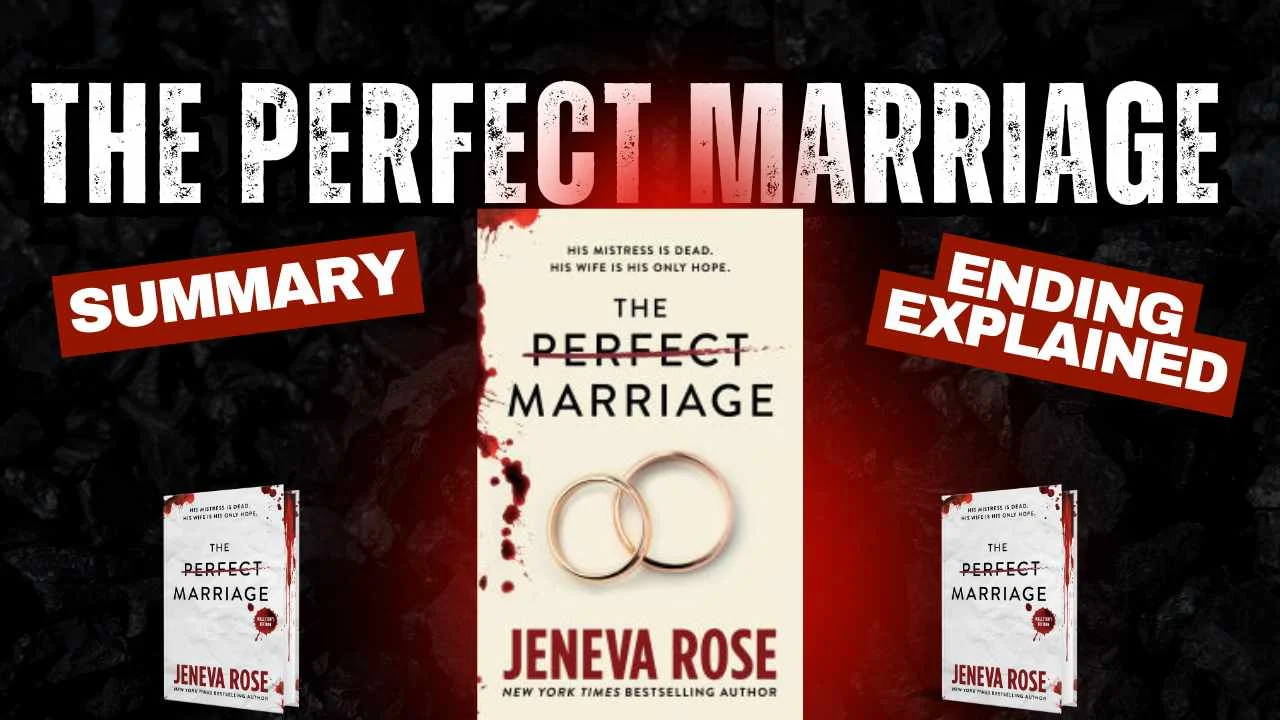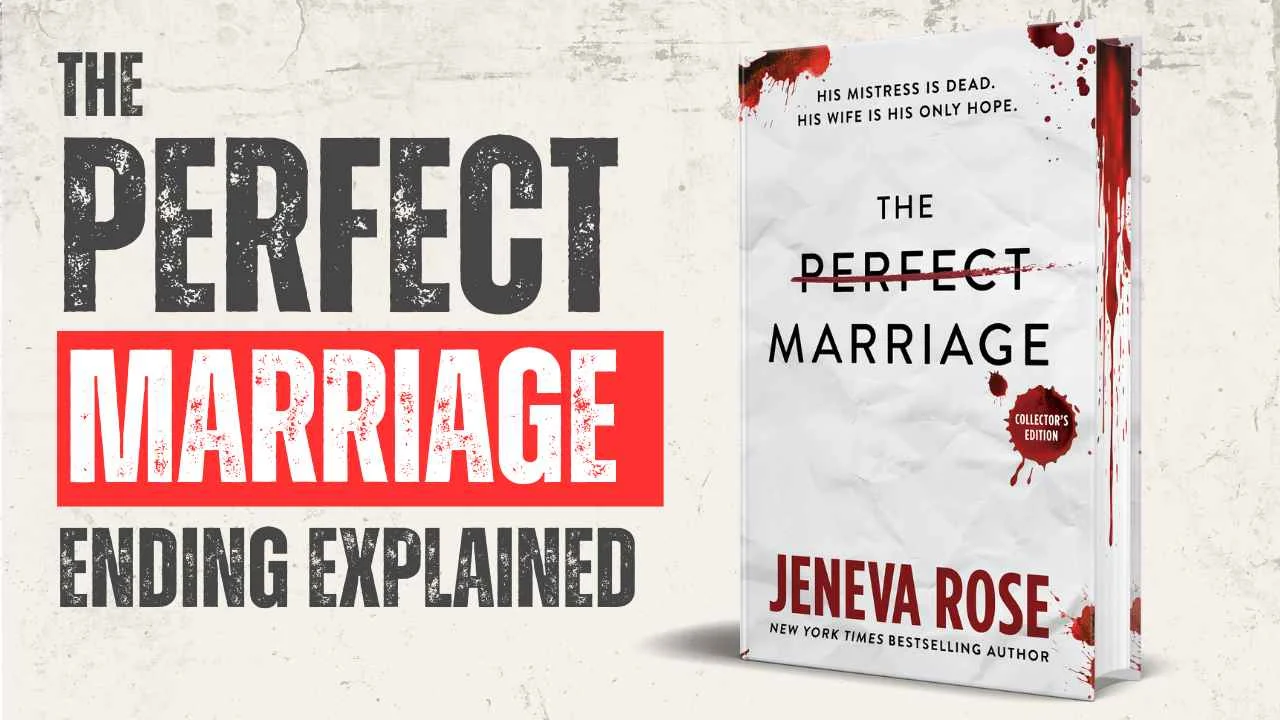
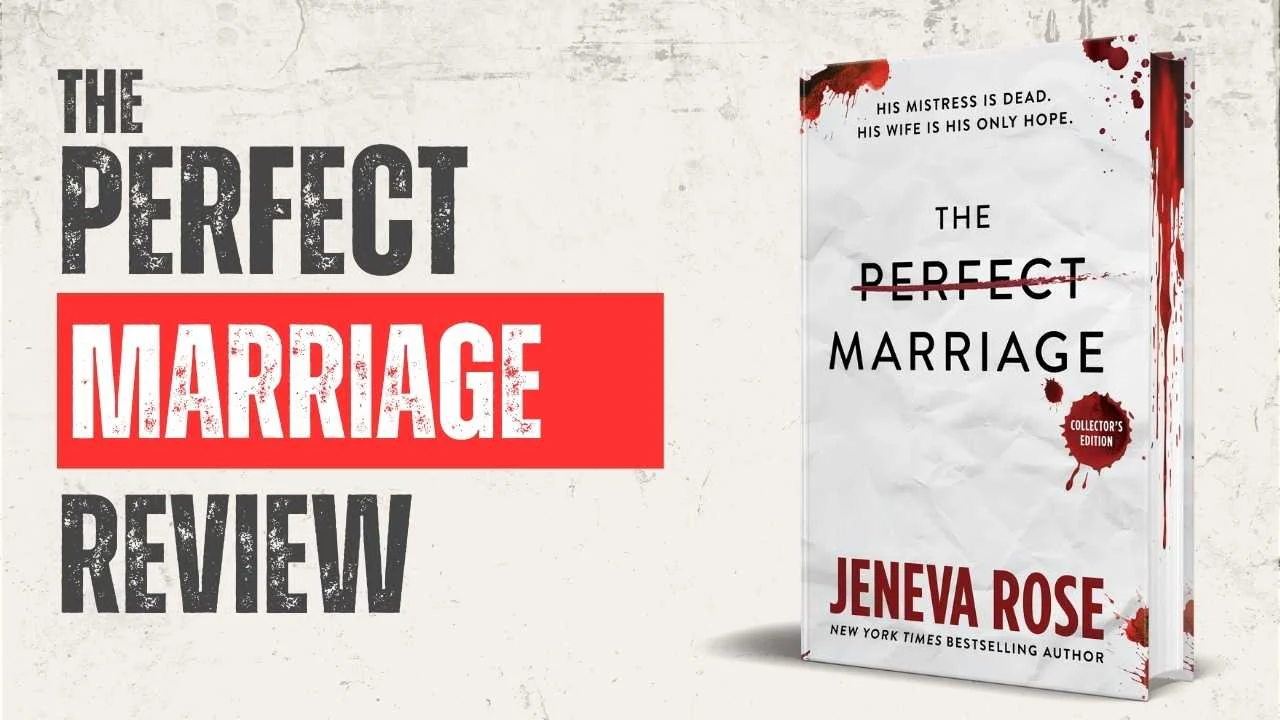
Content Warning: This review contains discussions of murder, infidelity, capital punishment, and complete spoilers for Jeneva Rose’s “The Perfect Marriage.”
What Happens When Your Marriage Counselor Is Also a Murder Suspect?
Picture this: You’re strapped to a gurney in a death chamber, lethal injection needles positioned in your arms, watching the clock tick down your final moments. The gallery holds faces you once loved and faces that destroyed you.
This isn’t a nightmare. It’s the opening scene of Jeneva Rose’s debut thriller novel, and it immediately poses one hell of a question: How did Sarah Morgan, Virginia’s most formidable criminal defense attorney, end up on death row?
I just finished “The Perfect Marriage,” and I’ve got thoughts. Strong ones. This 2020 psychological thriller has captivated readers with its jaw-dropping plot twist and lightning-fast pacing. But does it earn its place among the year’s best domestic thrillers? Let’s dissect this murder mystery scene by scene—spoilers and all.
The Setup: When Perfect Marriages Crack
Jeneva Rose burst onto the thriller scene with this debut novel that promised courtroom intrigue mixed with marital betrayal. Published in 2020, “The Perfect Marriage” positioned itself as a legal thriller meets infidelity thriller—a combination that’s catnip for suspense novel fans.
Here’s what you need to know upfront:
- Pages: Approximately 300-350 (varies by edition)
- Setting: Virginia
- Genre: Domestic thriller, legal suspense, crime fiction
- Reading Time: 4-6 hours (it’s genuinely a page-turner)
- Follow-up: Rose published “You Shouldn’t Have Come Here” in 2023
- Goodreads Rating: 3.8/5 stars (polarizing, we’ll discuss why)
The premise hooks you immediately. Sarah Morgan has built her reputation defending society’s worst. She’s the attorney you call when super due process is your only hope.
Her track record speaks volumes she’s never lost a capital case. Meanwhile, her husband Adam runs a successful business, and their decade-long marriage appears unshakeable.
Then Kelly Summers winds up dead. And Adam was sleeping with her.
Suddenly, Sarah isn’t crafting opening statements for others. She’s facing her own trial, her own potential execution, her own wrongful conviction nightmare.
Meet the Players in This Deadly Game
Sarah Morgan: The Protagonist Problem
Sarah should be fascinating. A female protagonist who’s spent years manipulating juries and exploiting legal loopholes now faces the system she’s gamed. The dramatic irony practically writes itself.
But here’s where Rose stumbles. Sarah lacks the complexity this setup demands. We’re told she’s brilliant, shown she’s cold, but rarely given access to genuine vulnerability. Her marriage thriller should make us feel her devastation over Adam’s betrayal instead, she processes his affair with detached calculation.
Sarah’s character traits:
- Ruthlessly competent in court
- Emotionally distant from everyone, including family
- Obsessed with winning above truth
- Capable of shocking deception
- Difficult to root for (intentional? We’ll get there)
The unreliable narrator aspect works better than the emotional core. Rose plants seeds of doubt about Sarah’s innocence from page one. Did she murder Kelly in a rage? Is her composure actually sociopathy? The ambiguity creates tension, but the execution (pun very intended) feels mechanical rather than earned.
Adam Morgan: The Cheating Husband Cipher
Adam exists primarily as a plot device. His affair with Kelly drives everything, yet we barely understand him beyond surface-level selfishness. Why did this successful businessman risk his marriage? What drew him to Kelly specifically?
The alternating perspectives technique could’ve given us Adam’s viewpoint to explore these questions. Instead, Rose keeps him at arm’s length, which ultimately serves the twist ending but weakens the toxic relationship dynamics that should anchor a domestic thriller.
What we know about Adam:
- Runs a profitable company
- Married to Sarah for 10+ years
- Conducted affair with Kelly for months
- Contains secrets that endanger everyone
- Displays classic narcissistic patterns
The Supporting Cast: A Mixed Bag
Grace, Sarah’s sister, provides the emotional warmth Sarah lacks. She’s loyal, concerned, and far more likable than our protagonist. Their relationship offers glimpses of Sarah’s humanity—when Rose bothers to develop it.
Calvin, the private investigator Sarah hires, conducts the real criminal investigation while law enforcement fumbles. He’s competent, thorough, and refreshingly professional in a book filled with incompetent authority figures.
Speaking of which: Sheriff Stevens, Deputy Hudson, and various officers represent the most staggeringly inept police investigation I’ve encountered in recent fiction.
They ignore exculpatory evidence, mishandle the crime scene, and conduct interrogation sessions that would get cases thrown out immediately.
I understand needing law enforcement to miss clues for your whodunit to work, but this borders on parody.
Kelly Summers haunts the narrative despite dying before page one. Through flashbacks and revelations, we piece together who she was—and why she became a target. Her character serves the serial killer subplot in ways I genuinely didn’t anticipate.
Character Effectiveness Table
| Character | Purpose | Execution | Impact on Plot |
| Sarah Morgan | Protagonist/Suspect | Moderate | Essential |
| Adam Morgan | Catalyst/Victim | Weak | Essential |
| Grace | Emotional anchor | Strong | Supportive |
| Calvin | Investigation driver | Strong | Critical |
| Sheriff Stevens | Law enforcement | Very weak | Moderate |
| Kelly Summers | Victim/Reveal device | Moderate | Essential |
The Plot Unravels (And So Does Everything Else)
Act One: Blood on Her Hands
Kelly Summers is discovered dead in Sarah and Adam’s lake house. The crime scene screams “crime of passion”—which immediately points to Sarah. After all, scorned wives murdering mistresses is practically a thriller trope. Carrie Underwood built a career on “Before He Cheats,” right?
Sarah learns about the affair and Kelly’s death simultaneously. The evidence against her mounts quickly:
- Her car near the crime scene around time of death
- No alibi for the murder window
- Motive dripping with rage and humiliation
- Opportunity through lake house access
- Forensic traces placing her there
The prosecutor slaps an ankle monitor on her faster than you can say “wrongful conviction.” Sarah’s confined to her home, unable to investigate freely, forced to trust others while her freedom drains away.
This section moves. Rose understands pacing, and she hooks readers with short chapters that end on mini-cliffhangers. You’ll burn through these pages quickly because each scene pulls you forward with “just one more chapter” momentum.
Act Two: Investigation and Interrogation
Here’s where the courtroom drama preparation happens. Calvin digs into Kelly’s background while Sarah strategizes her defense. The alternating perspectives expand to show us different angles on the investigation.
Key investigation discoveries:
- Kelly’s financial records show irregularities
- Multiple people had access to the lake house
- Timeline inconsistencies emerge
- Sarah’s exculpatory evidence stays hidden longer than believable
- The frame-up becomes increasingly obvious to readers (though not to police)
The interrogation room scenes crackle with the tension Rose does best. Sarah, accustomed to prepping clients for questioning, now faces detectives determined to break her. She deploys her legal expertise defensively, which frustrates investigators and makes her look guilty to readers conditioned by crime shows.
But the police investigation incompetence reaches absurd levels. They ignore obvious leads. They fail to question critical witnesses. They overlook evidence a first-year cadet would catch. I wanted to believe this served satirical purposes—exposing criminal justice failures—but it reads more like convenient plotting.
Act Three: The Trial and The Truth
The trial finally arrives, and Sarah takes the defendant chair she’s faced hundreds of times from the other side. The opening statement showcases her legal acumen even under extreme pressure. She’s fighting for her life using the same tactics she’s employed for murderers, rapists, and white-collar criminals.
Rose deserves credit for the courtroom drama authenticity—when she focuses on it. The legal procedures feel researched. The prosecution’s strategy makes sense. The jury dynamics ring true. These sections reminded me why I picked up a legal thriller in the first place.
Red flags scattered throughout earlier chapters now crystalize. That comment about Sarah’s past. That unexplained absence. That relationship inconsistency. Rose plants her foreshadowing heavily, which makes the twist ending feel inevitable rather than shocking.
The Twist: Serial Killer or Scorned Wife?
MAJOR SPOILERS AHEAD
Here’s where everything explodes. Sarah isn’t innocent—but not in the way we expected. The plot twist reveals that Sarah has been killing Adam’s mistresses for years. Kelly wasn’t a crime of passion; she was victim number four (or five? the count gets murky).
Sarah Morgan is a serial killer.
This revelation recontextualizes everything. Her cold demeanor wasn’t grief—it was sociopathy. Her legal expertise wasn’t ironic—it was how she evaded justice repeatedly. Her perfect marriage was a facade maintained through murder.
The twist’s strengths:
- Genuinely unexpected on first read
- Explains earlier character inconsistencies
- Adds depth to Sarah’s professional success
- Creates moral complexity (can we root for her?)
The twist’s weaknesses:
- Undermines the marital betrayal emotional core
- Requires massive police incompetence to work
- The psychology feels underdeveloped
- The revenge plot becomes something much darker
Adam knew. That’s perhaps the book’s cleverest element. He’s lived with a killer, benefiting from her eliminating inconvenient affairs while maintaining plausible deniability. Their toxic relationship makes conventional infidelity thrillers look quaint.
The death chamber opening now makes complete sense. We’ve been watching Sarah’s final hours, knowing she’ll receive lethal injection for Kelly’s murder. The time jump structure clicking into place provides genuine satisfaction, even if you saw it coming.
Writing Style: Fast Food Thriller
Rose writes with efficiency over elegance. Her prose prioritizes plot momentum over linguistic beauty, which suits the suspense novel genre fine. You won’t find gorgeous metaphors or poetic descriptions here—and you probably weren’t looking for them.
Sentence structure: Simple, direct, occasionally choppy. Rose favors short declarative statements that push narrative forward. Dialogue does most heavy lifting, which creates a screenplay-like quality.
Pacing: This might be Rose’s greatest strength. The page-turner designation fits perfectly. Chapters rarely exceed 10 pages. Cliffhangers abound. You’ll finish this in a day or two because the reading experience resembles binge-watching a Netflix series.
Technical accuracy: The legal elements mostly hold up. Rose clearly researched capital cases, super due process, and defense attorney tactics. Some shortcuts exist for dramatic purposes, but nothing egregiously wrong.
Emotional depth: Here’s the weakness. Character interiority remains shallow. We rarely access genuine feeling beneath the plot mechanics. The psychological thriller label implies psychological complexity—but Rose delivers plot complexity instead.
“I’ve defended the guilty and freed the innocent. But which one am I?”
Moments like this show Rose’s potential. The line lands with appropriate irony given Sarah’s true nature. Unfortunately, they’re scattered among more generic thriller prose that gets the job done without memorable flair.
What Works in This Twisted Tale
Let’s acknowledge the victories. Despite my criticisms, “The Perfect Marriage” succeeds in several areas:
The Hook Factor
That death chamber opening demonstrates strong craft. Starting at the end, then working backward, creates immediate investment. We know Sarah’s fate—now we need to understand how she got there.
Binge-Worthy Structure
The short chapters and constant momentum make this book disappear quickly. For readers who prioritize page-turner qualities over literary merit, Rose delivers completely. I read this in two sittings despite planning to pace myself.
Subverted Expectations
Most infidelity thrillers follow predictable patterns: wronged spouse seeks revenge, maybe crosses lines, but ultimately we sympathize with their pain. Rose says “nope” and makes her protagonist genuinely monstrous. That’s bold for a debut author trying to build an audience.
The Calvin Character
In a cast of extremes, Calvin provides grounded competence. His detective story within the larger narrative offers breathers from Sarah’s intensity. He’s the character I’d read a spinoff series about.
Twist Execution (Pun Intended)
Whether you love or hate the serial killer revelation, Rose commits to it fully. She doesn’t hedge or soften Sarah’s nature. The book asks: “What if the female protagonist of your domestic thriller is actually the villain?” It’s a fascinating question, even if the exploration could go deeper.
Where “The Perfect Marriage” Falls Apart
Now for the uncomfortable truths. This book has significant flaws that prevent it from achieving greatness:
Character Development Vacuum
Sarah never feels fully human. We see her actions, learn her secrets, but rarely access authentic interiority. For a psychological thriller, that’s a critical failure. The best examples in this genre—Gone Girl, The Silent Patient, Behind Her Eyes—make you inhabit their protagonists’ twisted perspectives. Rose keeps us at arm’s length.
Adam deserves his own paragraph of criticism. He’s such a cipher that his affairs lack impact. Who is he beyond “successful cheating husband”? What’s his inner life? Rose uses him as a plot device rather than exploring the man who’d stay married to a serial killer.
The Incompetence Pandemic
Every authority figure bungling every obvious lead strains credibility past breaking point. I can accept one detective missing clues. But an entire police department? The sheriff? The deputies? The prosecution initially? It’s lazy writing disguised as necessary plotting.
Real police mistakes vs. book police mistakes:
| Realistic Errors | “Perfect Marriage” Errors |
| Missing one or two clues | Missing all the clues |
| Tunnel vision on wrong suspect | Ignoring exculpatory evidence completely |
| Insufficient resources | Having resources, refusing to use them |
| Communication breakdowns | Everyone simultaneously incompetent |
Plot Holes You Could Drive Through
Question: How did Sarah avoid detection for multiple murders?
Answer: Police incompetence (again).
Question: Why didn’t any previous mistresses’ families investigate?
Answer: We don’t discuss it.
Question: How did Adam rationalize staying married?
Answer: Convenience, I guess?
Question: Where’s the FBI on a potential serial killer case?
Answer: [Rose has left the chat]
The Emotional Hollowness
A marriage thriller should make you feel the betrayal. An infidelity thriller should explore the rage, grief, and devastation of discovering your partner’s deception. Rose skips past these emotions to focus on courtroom tactics and murder reveals.
When Sarah learns about Adam’s affair, she processes it with eerie calm. She’s hurt, sure, but Rose never lets us sit in that pain. We jump immediately to strategy mode. For a book about a marriage’s destruction, there’s surprisingly little examination of what that marriage actually meant.
Predictable Red Flags
Rose telegraphs her twist ending so heavily that genre-savvy readers will figure it out early. The foreshadowing lacks subtlety. Characters mention Sarah’s “intensity” and “coldness” repeatedly. The serial killer reveal works better if you’re new to thrillers—veterans will spot it coming.
How It Compares to Other Thrillers
Versus Gone Girl: Gillian Flynn’s masterpiece offers complex, terrible people doing terrible things but with psychological depth Rose never achieves. Both feature shocking twists, but Flynn makes you understand her monsters.
Versus The Silent Patient: Alex Michaelides also structures his whodunit around withheld information and a climactic reveal. However, his character work makes the twist emotionally devastating, not just plot-clever.
Versus You Shouldn’t Have Come Here: Rose’s follow-up shows growth in some areas (atmosphere, setting) while maintaining similar weaknesses (character depth, logic gaps). She’s becoming a more skilled plotter without deepening her psychological exploration.
Versus typical courtroom dramas: John Grisham remains the legal thriller king because he balances legal intrigue with human stakes. Rose has the legal knowledge but not yet the character skills.
Who Should Pick This Up?
Perfect For You If:
- You prioritize plot over prose
- Twist endings matter more than character development
- You want something you’ll finish in a weekend
- Police incompetence doesn’t destroy immersion for you
- You enjoy domestic thrillers with dark edges
- You’re building a beach read collection
- You appreciate female protagonists who break molds (even monstrously)
Skip This If You Need:
- Complex psychological thriller elements
- Realistic criminal investigation procedures
- Deep emotional resonance
- Literary-quality prose
- Believable character motivations
- Nuanced relationship exploration
- Subtle foreshadowing and surprises
The Goldilocks Reader
This book works best for thriller fans who’ve read enough to appreciate subversions but not so much they’ll pick apart every plot convenience. If you’re between the extremes—not a complete novice, not an elite detective story obsessive—Rose hits a sweet spot.
My Verdict: Three Stars and Complicated Feelings
Rating: ★★★☆☆ (3/5 stars)
“The Perfect Marriage” is compelling junk food. It tastes great going down, satisfies your immediate craving, but leaves you nutritionally empty. That’s not necessarily terrible—sometimes you want fast food, not a gourmet meal.
Rose demonstrates real skill with pacing and structure. She understands how to hook readers and maintain momentum across 300+ pages. The plot twist shows boldness that many debut authors lack. These are genuine achievements.
But the weaknesses drag it down from potential greatness. The hollow characters, absurd police behavior, and emotional superficiality prevent this from standing alongside the genre’s best. It’s entertaining without being memorable, clever without being profound.
Would I recommend it? With caveats. If you want a quick suspense novel for a flight or beach day, absolutely. If you’re seeking your next obsession to dissect with book club friends, look elsewhere.
Will I read Rose’s other work? Probably. “You Shouldn’t Have Come Here” intrigues me enough to see whether she’s addressed some weaknesses. Growth between books is normal—and welcome.
Rereadability: Low. Once you know the twist, the journey loses much appeal. The character work isn’t rich enough to reward revisiting for new insights.
Book Club Discussion Questions
If you’re reading this for a group, here are spoiler-filled conversation starters:
- At what point did you suspect Sarah might be guilty? What clues tipped you off?
- Can we sympathize with Sarah at all? Does understanding Adam’s repeated infidelity create any justification?
- How would you defend Sarah’s actions? What psychological profile would you construct?
- The police incompetence: realistic criticism of justice system failures or lazy plotting?
- Would you stay married to someone knowing their secret? Explore Adam’s decision.
- How does this compare to other “unreliable narrator” thrillers you’ve read?
- Did the serial killer twist enhance or detract from the marital betrayal story?
Final Thoughts: Perfectly Imperfect
The irony of the title isn’t lost on me. “The Perfect Marriage” refers to Sarah and Adam’s facade—a relationship maintained through murder, deception, and mutual complicity. But it could also describe the book itself: perfectly crafted for commercial success, imperfectly executed on deeper levels.
Jeneva Rose has a career ahead of her. This debut novel sold well enough to launch a follow-up and build an audience. She understands thriller mechanics and reader appetites. With continued development of character skills and willingness to dig deeper psychologically, she could become genuinely formidable.
For now, “The Perfect Marriage” remains a solid entry in the domestic thriller category—entertaining, occasionally surprising, and frustratingly shallow. It’s the thriller equivalent of a summer blockbuster: you’ll enjoy the ride while it lasts, then mostly forget about it.
But hey, at least the death chamber opening was killer.
Where to Buy:
- Amazon (paperback, Kindle, audiobook)
- Barnes & Noble
- Support your local independent bookstore
Read More Jeneva Rose:
- “You Shouldn’t Have Come Here” (2023)
- Follow her on social media for updates on upcoming releases
Have you read “The Perfect Marriage“? Did the twist work for you, or did it feel like a cheat? Drop your thoughts in the comments—I’d love to debate whether Sarah Morgan deserves our contempt or our fascination.

Maxwell Hayes is a modern-day wordsmith with a passion for capturing life’s most powerful emotions in just a few lines. With a background in literature and philosophy, Maxwell has spent over a decade exploring the art of language, turning everyday thoughts into timeless wisdom.
As the lead writer at QuotesNest, he specializes in curating and crafting inspiring, thought-provoking, and deeply relatable quotes. Whether it’s about love, heartbreak, success, or solitude, Maxwell’s words resonate across cultures and generations. His work bridges the gap between modern insight and classic wisdom—always poetic, always personal.
When he’s not writing, Maxwell can be found traveling through quiet towns, journaling from cafés, or studying ancient texts in search of forgotten truths. He believes that quotes aren’t just words—they’re mirrors, reflecting who we are and what we strive to become.
Books by Maxwell Hayes
📚 Whispers Between the Lines – A poetic journey through quotes on life, love, and letting go.
📚 Ink & Echoes – A soulful collection of timeless thoughts for modern minds.
📚 Fragments of Fire – Bold and raw quotes about growth, pain, and personal power.