In the ever-evolving world of slang, one phrase that has captured the attention of Gen Z, Millennials, and social media users alike is “No Cap.” You might have heard it in rap songs, TikTok videos, or casual conversations with friends, but what does it truly mean? Is it just another way to say “I’m serious,” or is there more to its history and usage?
In this comprehensive guide, we’ll break down the meaning of No Cap, explore its origins, trace its cultural and linguistic significance, and give you practical examples of how to use it correctly. By the end of this post, you’ll understand the full context behind one of today’s most popular slang terms.
What Does “No Cap” Mean?
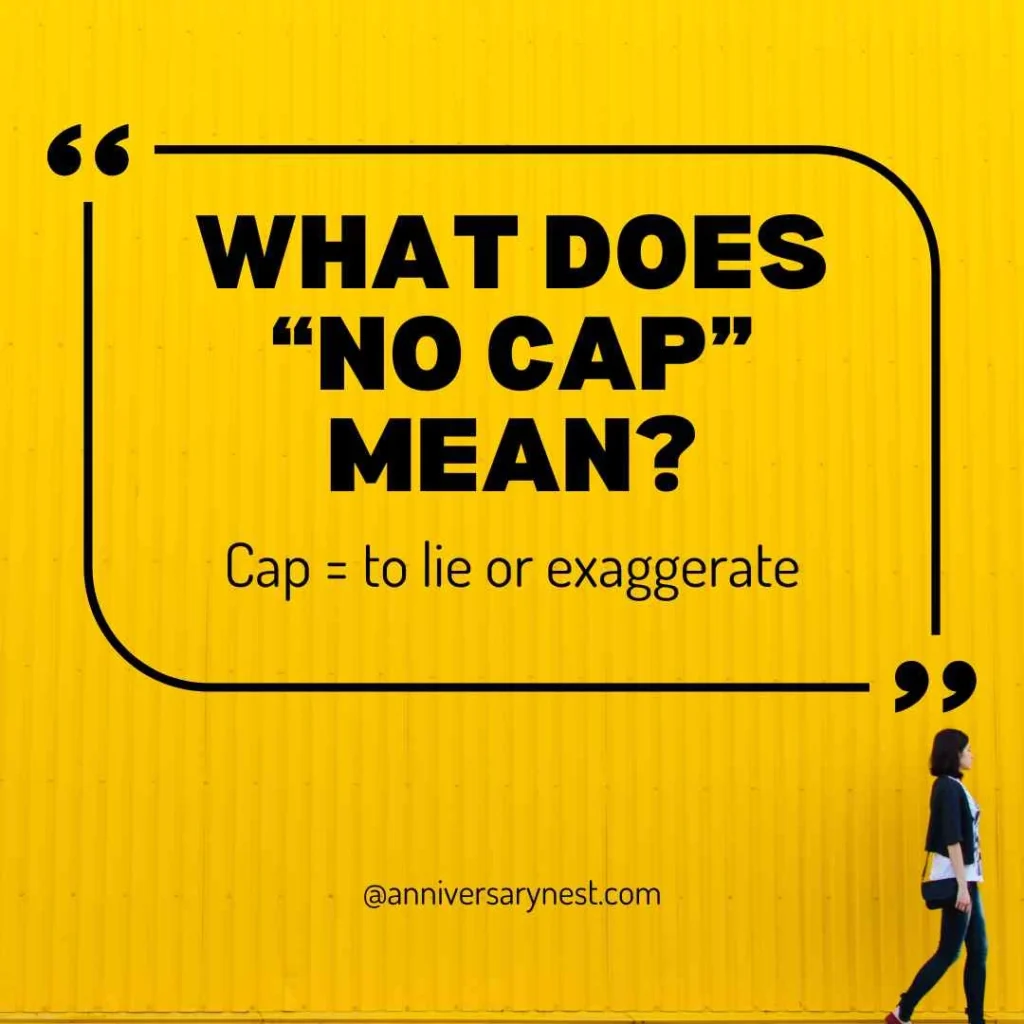
At its core, “No Cap” is an American slang phrase used to emphasize honesty. When someone says “No Cap,” they are essentially saying “I’m telling the truth” or “I’m not exaggerating.”
- Cap = to lie or exaggerate
- No Cap = no lie, truthfully
For example:
- “I just finished a 10-mile run, no cap.” → I really ran 10 miles, I’m not exaggerating.
- “This pizza is the best I’ve ever had, no cap.” → I genuinely mean it; I’m not joking.
The term functions as a verbal emphasis marker, giving your statements extra credibility and signaling sincerity in casual conversation.
What Does “Cap” Mean in Slang?
Before understanding No Cap, it’s important to know the meaning of “Cap.”
Cap is a slang verb meaning to lie, exaggerate, or make false claims. Saying someone is “capping” means they are not being truthful.
Examples of “Cap” in Use:
- “He said he’s the richest kid in school—he’s capping.”
- “Stop capping, I know you didn’t run 5 miles today.”
The expression is flexible and can be used in multiple forms:
| Term | Meaning | Example |
| Cap | Lie / exaggeration | “That’s cap, you didn’t do all that work.” |
| Capping | Present continuous of lying/exaggerating | “He’s capping about his new car.” |
| Stop Capping | Command to stop lying or exaggerating | “Stop capping and tell me the truth.” |
In slang-heavy conversations, No Cap is essentially the opposite: it signals honesty.
Origin of “No Cap”
The origins of No Cap are deeply rooted in African American Vernacular English (AAVE) and Southern rap culture.
African American Vernacular English (AAVE)
AAVE is a linguistic variety with unique grammar, vocabulary, and pronunciation patterns, historically spoken by African Americans. Many modern slang words, including “Cap” and “No Cap,” emerged from AAVE.
- The word “Cap” historically meant “to surpass” or “to top,” which over time evolved into meaning “to boast or exaggerate.”
- The transformation from “to top” → “to lie or exaggerate” shows the semantic evolution of slang terms over decades.
Historical References
- In the early 20th century, playful verbal sparring games, like “The Dozens,” involved exchanging witty insults for fun. Phrases emphasizing exaggeration or boasting were common.
- Slang dictionaries, including Green’s Dictionary of Slang, note that Cap was used in the 1940s to mean “to surpass or top something,” which eventually influenced its meaning in AAVE.
Folk Etymology: Gold-Capped Teeth
Some speculate that “No Cap” may relate to gold or gold-capped teeth, symbolizing status. The idea is that someone with gold teeth wouldn’t need to exaggerate their wealth—hence, “No Cap.” While intriguing, linguists like Kelly Elizabeth Wright, professor of Language Sciences at the University of Wisconsin–Madison, consider this more folk etymology than factual origin.
Who Popularized “No Cap”?
While the term has older linguistic roots, No Cap gained mainstream popularity through rap music and social media.
- Southern rap culture and trap music played a critical role in bringing the phrase to the public eye.
- Lil Baby is credited with popularizing “No Cap” in his 2018 song “No Cap.”
- Other celebrities, including Cardi B and Kendall Jenner, further amplified its use on social media platforms.
By 2020, No Cap became a viral expression widely used on TikTok, Instagram, Twitter, and even casual texting, bridging the gap from hip-hop subculture to mainstream youth communication.
Linguistic & Cultural Significance of “No Cap”
The importance of No Cap goes beyond just being a fun slang word. It reflects semantic shifts, social identity, and linguistic evolution.
Semantic Shift
Originally, Cap meant “to top” or “to surpass.” Over decades, it evolved to signify lying or exaggerating.
- No Cap now signals truthfulness and emphasis, demonstrating a semantic reversal.
Pragmatic Function
No Cap acts as a discourse marker, giving statements credibility:
- “This is the best concert I’ve ever been to, no cap.”
- Emphasizes sincerity and aligns with the speaker’s social identity.
Identity Signaling
Language often communicates identity. Using No Cap indicates:
- Affiliation with youth culture
- Awareness of current slang trends
- Participation in informal social groups
Pop Culture Influence
- Rap music, TikTok challenges, and meme culture helped “No Cap” spread globally.
- Social media users often use shorthand NC for texting, further embedding it in online lexicon.
Expert Insight
“Capping has long been associated with boasting, exaggerating, or lying. No Cap flips this, signaling honesty in modern youth communication.”
— Kelly Elizabeth Wright, University of Wisconsin–Madison
How to Use “No Cap” Correctly
Using No Cap is straightforward once you understand context and tone.
Placement in a Sentence
- Usually placed at the end of a statement.
- Can also be used mid-sentence for emphasis, though less common.
Examples of Correct Usage
| Context | Sentence Example |
| Casual conversation | “This burger is the best I’ve ever had, no cap.” |
| Social media caption | “Just got VIP tickets to the concert, no cap.” |
| Bragging / humorous | “I can solve this puzzle in 5 minutes, no cap.” |
| Agreement / sincerity | “You’re the best player on the team, no cap.” |
When Not to Use
- Professional emails or formal reports
- Situations where slang may confuse the audience
Tip: Use it in casual contexts or online interactions for maximum effect.
Examples of “No Cap” in Sentences
Here’s a list of commonly seen No Cap sentences:
- “I just ran 10 miles straight, no cap.”
- “This pizza is the best I’ve ever had, no cap.”
- “I worked until 2 AM last night, no cap.”
- “That new movie is incredible, no cap.”
- “I really aced the exam, no cap.”
These examples show how No Cap strengthens statements by emphasizing honesty.
Is “No Cap” Still Trending?
Yes. The phrase continues to trend among Gen Z, social media users, and even Millennials who enjoy youth slang.
- Abbreviated as NC in texting
- Common in TikTok videos and YouTube vlogs
- Used in memes and humorous captions
- Remains a mainstream slang term, bridging subculture and popular culture
Its staying power depends on pop culture adoption, social media reinforcement, and continued youth engagement.
Frequently Asked Questions
Is “No Cap” disrespectful?
No, it’s generally neutral. Context matters—used sarcastically, it can imply disbelief.
Is “No Cap” appropriate for adults?
Yes, in casual conversations. Avoid formal professional settings.
What’s the opposite of “No Cap”?
The opposite is “Cap”—meaning someone is lying or exaggerating.
What does “Stop Capping” mean?
A command telling someone to stop lying or exaggerating.
Is “No Cap” proper English?
It’s slang, not standard English, but widely understood in informal contexts.
When did “No Cap” become popular?
Around 2018, popularized by Lil Baby and spread via social media by 2020.
Related Slang Terms
Understanding No Cap often involves other modern slang:
- Stop capping → stop lying
- Bet → agreement or challenge
- Bussin → very good, delicious
- For real → truthfully
- On God → swear honestly
- Deadass → seriously
- Lowkey / Highkey → subtle vs obvious emphasis
Conclusion
No Cap is more than a trendy slang phrase—it’s a linguistic symbol of honesty, identity, and cultural influence. Rooted in African American Vernacular English and popularized by trap music, it has evolved to become a staple in modern youth communication.
Using No Cap correctly allows you to convey sincerity, connect with peers, and participate in today’s evolving pop culture language.
So next time someone drops a “No Cap,” you’ll know exactly what it means—and you can confidently use it yourself in everyday conversations.

Maxwell Hayes is a modern-day wordsmith with a passion for capturing life’s most powerful emotions in just a few lines. With a background in literature and philosophy, Maxwell has spent over a decade exploring the art of language, turning everyday thoughts into timeless wisdom.
As the lead writer at QuotesNest, he specializes in curating and crafting inspiring, thought-provoking, and deeply relatable quotes. Whether it’s about love, heartbreak, success, or solitude, Maxwell’s words resonate across cultures and generations. His work bridges the gap between modern insight and classic wisdom—always poetic, always personal.
When he’s not writing, Maxwell can be found traveling through quiet towns, journaling from cafés, or studying ancient texts in search of forgotten truths. He believes that quotes aren’t just words—they’re mirrors, reflecting who we are and what we strive to become.
Books by Maxwell Hayes
📚 Whispers Between the Lines – A poetic journey through quotes on life, love, and letting go.
📚 Ink & Echoes – A soulful collection of timeless thoughts for modern minds.
📚 Fragments of Fire – Bold and raw quotes about growth, pain, and personal power.