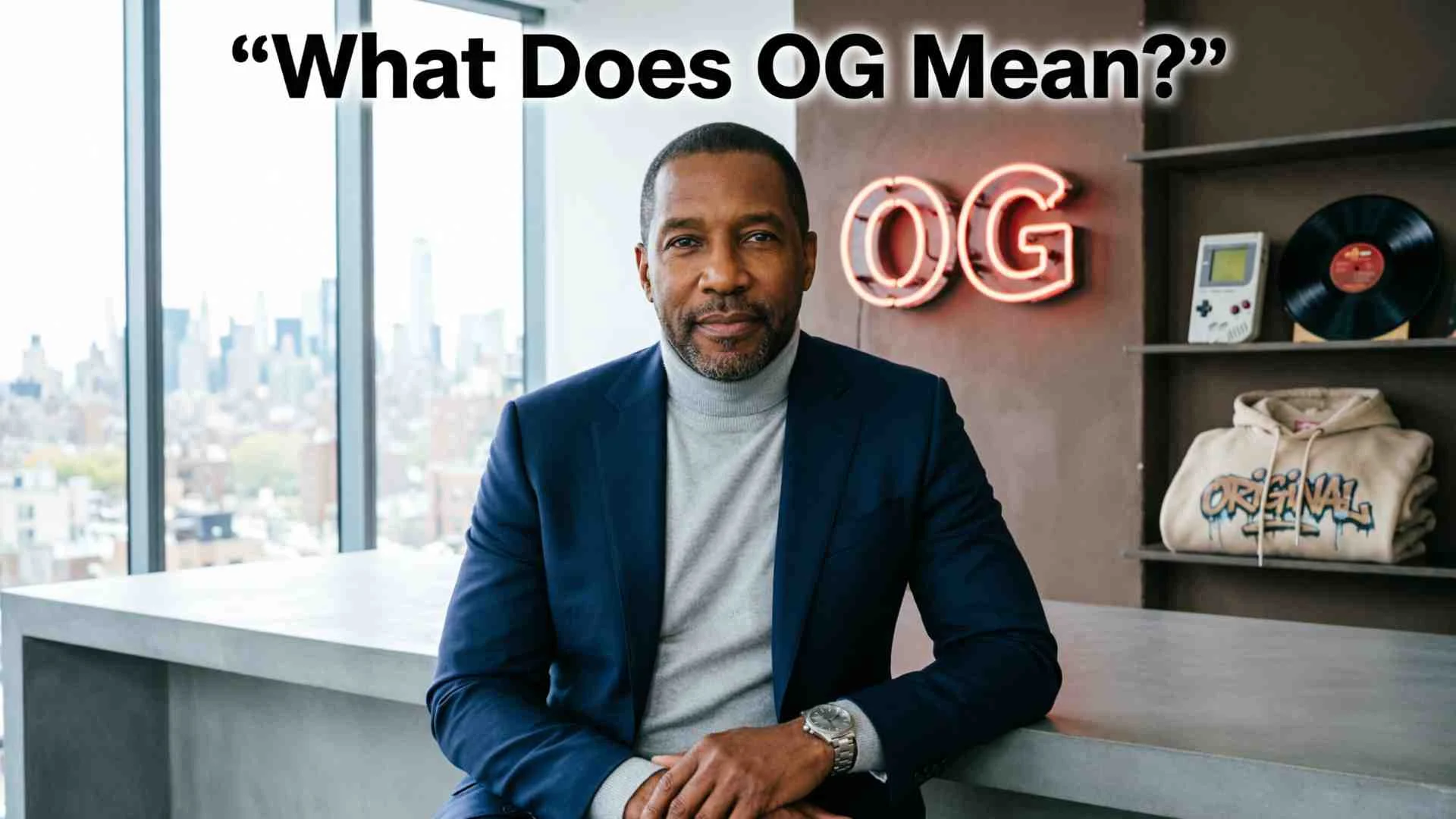
What does OG mean? If you’ve seen this term on social media, in text messages, or heard someone say “He’s the OG,” you might be wondering what it actually stands for.
Don’t worry the meaning is simple and mostly positive.
Originally, OG stood for “Original Gangster,” but today it usually describes someone who is authentic, respected, experienced, or a true original in their field.
Whether it’s used among friends, online communities, or pop culture conversations, OG has become a popular slang term with a cool reputation.
In this guide, you’ll learn the real meaning of OG, its origin, and how people use it today in a simple and easy way. 🚀
What Does OG Stand For?
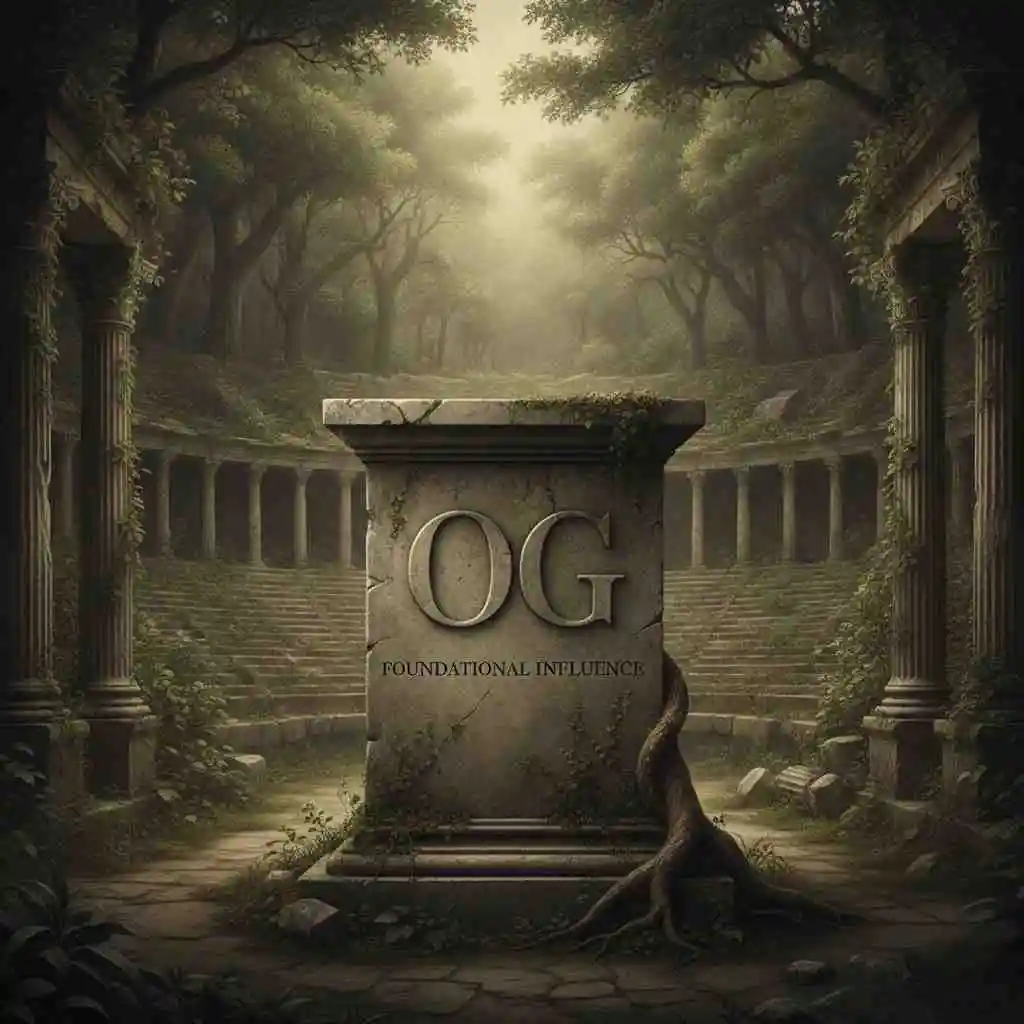
At its core, OG stands for “Original Gangster.”
That phrase didn’t start as a meme. It carried weight. In its original setting, it described someone who had:
- Longevity in a group
- Status earned through experience
- Street credibility
- Foundational influence
Over time, people shortened “Original Gangster” to simply OG. The abbreviation made it easier to say and write. That efficiency helped the term spread.
Today, when someone asks, “What does OG mean?” the answer depends on context. In modern slang, it usually means:
- A respected veteran
- An originator
- Someone authentic
- A long-time supporter
- An expert in their field
The meaning shifted from literal to symbolic. That shift matters.
The OG Origin: 1970s Los Angeles Street Culture
To understand OG meaning fully, you have to go back to the 1970s.
The term emerged in South Central Los Angeles, tied to street gangs. One group often linked to the early use of the term is the Original Gangster Crips, a faction within the broader Crips network.
In that setting, calling someone an OG meant:
- They were there from the early days.
- They held authority.
- They commanded respect.
- They survived long enough to earn status.
This wasn’t casual slang. It signaled hierarchy.
Los Angeles played a central role in shaping American urban culture during that era. The city of Los Angeles became a hotspot for evolving street language, music, and identity. OG emerged from that environment.
Key Historical Facts About OG
| Element | Detail |
| Time Period | Early to mid-1970s |
| Location | South Central Los Angeles |
| Original Meaning | Senior, respected gang member |
| Tone | Serious, hierarchical |
| Social Context | Street-based group identity |
Back then, the term carried gravity. It wasn’t playful. It wasn’t ironic. It meant something real.
How Hip Hop Spread OG Beyond the Streets
Language travels through culture. Few cultural forces spread slang faster than music.
In the 1980s and 1990s, hip hop amplified urban vocabulary nationwide. Artists in Hip hop used OG in lyrics to signal credibility and authenticity.
Meanwhile, Rap music gave the word rhythm and repetition. Radio stations played those tracks. Fans repeated the language. The slang crossed state lines.
By the 1990s:
- Suburban teens knew the term.
- Media outlets referenced it.
- Movies and TV shows echoed it.
OG no longer belonged only to Los Angeles streets. It entered mainstream culture.
Music didn’t just spread the term. It softened it. The word began to represent authenticity rather than strictly gang status.
The Semantic Shift: From Gang Identity to Cultural Compliment
Language rarely stands still. Words evolve through repetition and context.
OG underwent a semantic shift. That means its meaning expanded beyond its original definition.
Originally:
OG = Original Gangster = senior gang member.
Now:
OG = Authentic originator or respected veteran.
This transformation happened gradually. People started using OG metaphorically. Instead of referencing gangs, they used it to describe:
- The first version of something
- A long-time expert
- A respected elder
- A cultural pioneer
The shift reflects a broader pattern in language evolution. Words detach from their roots and take on new life.
OG Meaning in Modern Slang
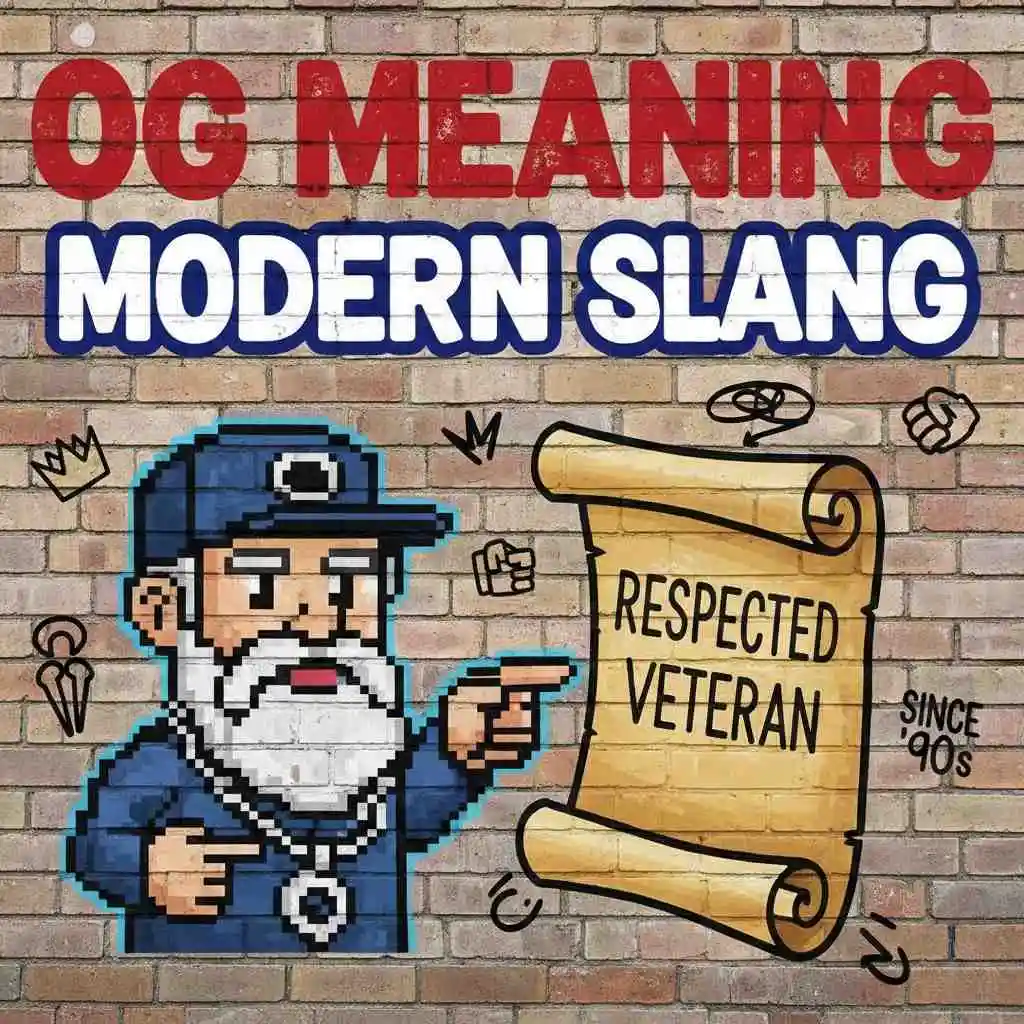
Today, when someone says “He’s an OG,” they usually mean one of the following:
Common Modern Definitions of OG
- Authentic person
- Expert at something
- Original creator
- Long-standing member
- Respected veteran
- Influential figure
Notice the tone. It’s positive.
In most cases, OG functions as a compliment.
Is OG Still About Crime?
Short answer: No.
Long answer: The origin involved gang culture. Modern usage rarely does.
Most people who say OG today have zero connection to gangs. The word now lives in:
- Sports conversations
- Pop culture commentary
- Social media captions
- Casual friend groups
Context shapes interpretation. When someone calls a basketball legend an OG, they aren’t referencing crime. They’re praising legacy.
OG as a Noun and an Adjective
Grammar matters. OG works in multiple roles.
OG as a Noun
- “She’s an OG in this industry.”
- “Respect the OG.”
In these cases, OG refers directly to a person.
OG as an Adjective
- “That’s the OG recipe.”
- “I prefer the OG version.”
- “He drives the OG model.”
Here, OG modifies another noun. It signals originality.
The flexibility helps the word survive. Slang that adapts tends to stick around.
OG in Pop Culture and Media

Pop culture loves nostalgia. OG fits perfectly into that mood.
For example:
- Fans of The Lion King often call the 1994 version the OG compared to the 2019 remake.
- Viewers who grew up watching Disney Channel refer to early 2000s shows as OG classics.
- Music fans describe Beyoncé as an OG in modern R&B due to her decades-long influence.
- Basketball enthusiasts call Michael Jordan the OG of NBA greatness.
In each case, OG signals:
- Original status
- Long-term impact
- Cultural authority
The word now moves easily across industries.
OG vs Old-School: What’s the Difference?
People often confuse these two terms. They overlap yet differ subtly.
| Term | Meaning | Emotional Tone | Example |
| OG | Foundational, respected original | Strongly positive | “She’s the OG designer.” |
| Old-school | From an earlier era | Neutral to positive | “He has old-school style.” |
OG implies influence and authenticity. Old-school simply refers to time.
Someone can be old-school without being OG. The reverse isn’t true.
How Teens Use OG Today
Teen slang evolves fast. OG, surprisingly, endures.
In youth culture, OG often means:
- Someone loyal since day one
- A friend who stayed consistent
- A person who knows the history
- A trendsetter
- A respected peer
For example:
“You’ve been here since the beginning. You’re an OG.”
Notice the tone. Warm. Friendly. Affirming.
The term no longer feels heavy. It feels casual.
Why Parents Sometimes Misinterpret OG Meaning
Parents often associate OG with crime due to its origin.
That reaction makes sense historically. However, modern usage differs dramatically.
Three factors create confusion:
- Media portrayal of 1990s gang culture
- Lack of awareness about semantic shifts
- Generational language gaps
In reality, when teens use OG today, they usually mean something positive.
OG in Social Media Language
Social media accelerated slang adoption.
Platforms like Instagram, TikTok, and X favor:
- Short expressions
- Catchy abbreviations
- Emotionally loaded words
OG fits that mold perfectly.
Why OG Works Online
- It’s only two letters.
- It carries strong meaning.
- It feels nostalgic.
- It signals authenticity.
- It works in hashtags.
Examples:
- #OGvibes
- #OGstatus
- “Back with the OG crew.”
The brevity helps it thrive in digital communication.
The Role of OG in Cultural Identity
Words shape identity. OG communicates belonging.
When someone calls themselves an OG, they signal:
- Experience
- Seniority
- Authentic roots
- Cultural awareness
It becomes a badge.
In communities where credibility matters, OG still carries power. The tone may be lighter now, yet the core idea remains respect.
Examples of OG Used in Everyday Sentences
Here’s how the term appears naturally:
- “She’s the OG founder of this startup.”
- “I still use the OG design.”
- “He’s an OG in the fitness world.”
- “That’s the OG sneaker drop from 2015.”
- “You’re one of my OG friends.”
Notice something consistent. The term always points back to originality and respect.
When Not to Use OG
Even popular slang has limits.
Avoid OG in:
- Academic essays
- Formal legal documents
- Professional business reports
- Government communication
- Serious historical analysis
Slang belongs in informal settings. Context determines appropriateness.
The Psychology Behind Calling Someone an OG
Why does the word feel good?
Because it combines three powerful human values:
- Recognition
- Loyalty
- Longevity
Humans respect people who stick around. We admire pioneers. We value authenticity.
Calling someone an OG taps into that emotional wiring.
It’s short. Yet it carries weight.
How OG Reflects Language Evolution
Linguists study how slang moves from subculture to mainstream.
OG follows a classic pattern:
- Origin in a specific community
- Spread through music and media
- Adoption by broader audiences
- Semantic softening
- Integration into everyday language
This pattern mirrors other slang transformations throughout history.
Language behaves like a living organism. It adapts to survive.
OG Meaning in Different Contexts
Context shapes nuance.
In Sports
- Refers to veteran players.
- Highlights legendary status.
- Emphasizes influence.
In Business
- Signals founding members.
- Points to industry pioneers.
- Conveys long-term expertise.
In Entertainment
- Celebrates iconic performers.
- Distinguishes original versions.
- Recognizes cultural impact.
In Friend Groups
- Marks loyalty.
- Signals shared history.
- Expresses affection.
The meaning remains consistent. The application varies.
Frequently Asked Questions About OG Meaning
Does OG always mean gangster?
No. Modern usage rarely connects to gangs.
Is OG offensive?
Generally no. Tone and context determine perception.
Can women be called OG?
Absolutely. The term applies regardless of gender.
Is OG internet slang?
It predates the internet. Social media accelerated its spread.
Is OG a compliment?
In most modern settings, yes.
Quick Reference: OG Meaning at a Glance
| Question | Answer |
| What does OG stand for? | Original Gangster |
| Where did OG originate? | 1970s Los Angeles street culture |
| How did it spread? | Through hip hop and rap music |
| What does OG mean today? | Authentic, respected original |
| Is it positive? | Usually ye |
Conclusion
So, what does OG mean?
It started as “Original Gangster” in 1970s Los Angeles street culture. Over time, music, pop culture, and social media reshaped the term. Today, OG usually means authentic, respected, original, and experienced.
Language changes. Meanings evolve. Yet OG kept its core idea earned respect. When someone calls you an OG, they’re recognizing your loyalty, influence, or long-standing presence. That’s not a small compliment.
Now when you hear or use the word OG, you won’t just repeat slang. You’ll understand the history, the evolution, and the meaning behind it.

Maxwell Hayes is a modern-day wordsmith with a passion for capturing life’s most powerful emotions in just a few lines. With a background in literature and philosophy, Maxwell has spent over a decade exploring the art of language, turning everyday thoughts into timeless wisdom.
As the lead writer at QuotesNest, he specializes in curating and crafting inspiring, thought-provoking, and deeply relatable quotes. Whether it’s about love, heartbreak, success, or solitude, Maxwell’s words resonate across cultures and generations. His work bridges the gap between modern insight and classic wisdom—always poetic, always personal.
When he’s not writing, Maxwell can be found traveling through quiet towns, journaling from cafés, or studying ancient texts in search of forgotten truths. He believes that quotes aren’t just words—they’re mirrors, reflecting who we are and what we strive to become.
Books by Maxwell Hayes
📚 Whispers Between the Lines – A poetic journey through quotes on life, love, and letting go.
📚 Ink & Echoes – A soulful collection of timeless thoughts for modern minds.
📚 Fragments of Fire – Bold and raw quotes about growth, pain, and personal power.